


After months of uncertainty, litigation and complex negotiations, the future of one of the world’s most visited cultural institutions is now secured.
The Van Gogh Museum in Amsterdam and the Dutch government have officially announced the achievement of an agreement , ending the dispute over the financing of a large-scale and urgent renovation worth 104 million euros .
The long-awaited renovation is scheduled to begin in the fall of 2028. The best news for millions of art lovers is that the museum will remain partially open throughout the reconstruction period, providing constant access to its priceless permanent collection.
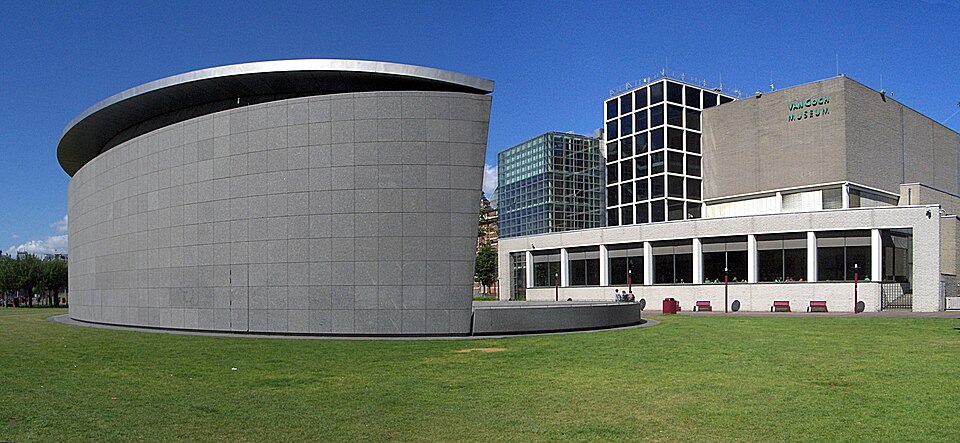
What necessitates this large-scale renovation?
The project does not envisage the construction of a new wing or a cosmetic change to the galleries. The building, which has been faithful to art for more than 50 years, is simply worn out by the intense tourist flow. Already in the institution’s annual report for 2024, it was warned that the security, climate control and sustainability systems need urgent replacement.
When it comes to the Van Gogh Museum, climate control is not a matter of comfort, but of the physical survival of the works. The institution houses the largest collection of the Dutch genius’s works in the world:
- Over 200 paintings
- About 500 drawings
- Almost all of the artist’s personal letters.
The paper on which the drawings and letters were made is extremely sensitive to light and moisture. Without immediate modernization of the systems, the safety of these world masterpieces would be jeopardized in the long term.
The secrets behind the deal: Who will pay the bill?
Although the mediation was successful and the project was officially saved, the financial details of the deal remain a closely guarded secret. A museum spokesman declined to reveal exactly how the 104 million euros will be distributed.
Before the agreement, the positions of the two sides seemed unthinkable for convergence:
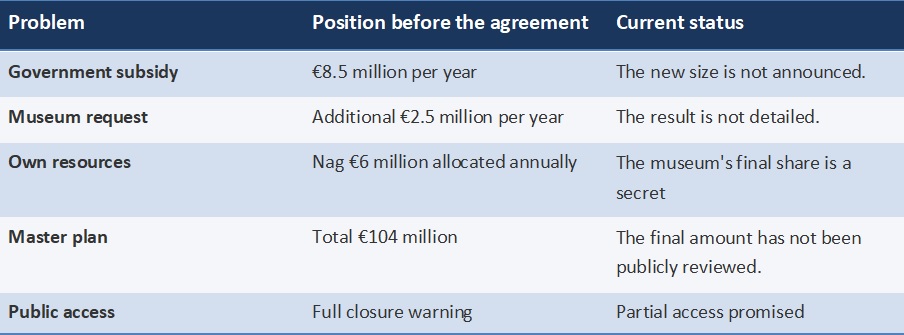
The main conflict was rooted in the classification of costs. The museum insisted that €76 million was for ongoing maintenance and €23 million for sustainability measures (environmental and energy improvements). However, the ministry’s experts claimed that the sustainability amount was €56 million. This difference was crucial, as the state only covers ongoing maintenance, but requires the museum to finance its additional environmental ambitions itself through loans or equity. The published agreement never reveals how this dispute was resolved.
The Path of Conflict: From 1962 to Today
The roots of this dispute are actually older than the museum building itself. It all starts with the historic agreement between the artist’s heirs and the state:
- 1962: Vincent Willem van Gogh (the artist’s nephew) and the remaining heirs transfer the family collection to the Vincent van Gogh Foundation. In return, the Dutch state undertakes to build and maintain a museum to preserve the collection and keep it permanently accessible to the public.
- 1973: The main building, designed by legendary architect Gerrit Rietveld, officially opens.
- 2024-2025: Negotiations for emergency repairs reach a dead end. The government declares that the current subsidy is sufficient. The museum decides to challenge the decision in court.
- February 2026: The scheduled court case is postponed at the last minute to give out-of-court mediation a chance.
- October 8, 2026: Mediation ends successfully. The parties sign the formal agreement in the “spirit of the 1962 treaty.”
What does “partially open” mean for visitors?
The museum has made a firm commitment that the permanent collection will remain accessible, but that doesn’t mean the visitor experience will be the same. Most of the construction work will take place behind the scenes, but a phased plan for which rooms will close and when is still missing.
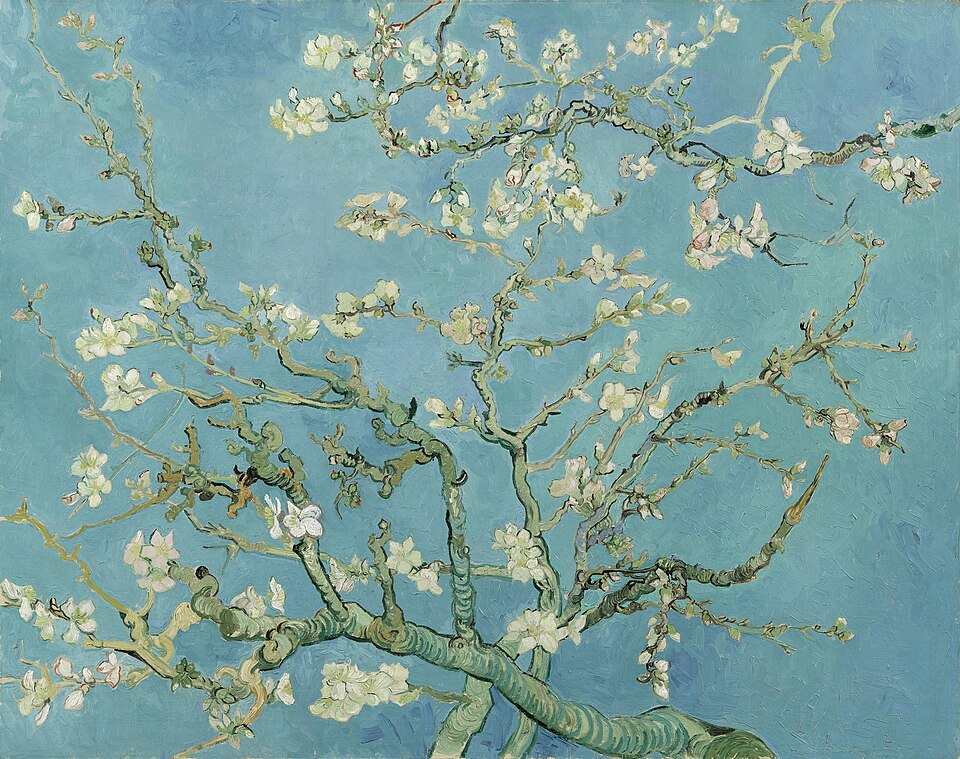
The exhibition includes iconic paintings such as “Sunflowers” (1889), “Almond Blossom” (1890) and “Peasants Eating Potatoes” (1885). The management guarantees access to the collection, but there is no explicit promise that any particular painting will be exhibited continuously without interruption. Temporary rotations, closures of certain rooms and changes in the capacity for visitors on a daily basis are possible.



.jpg)